
A Floating Dream in Dubai
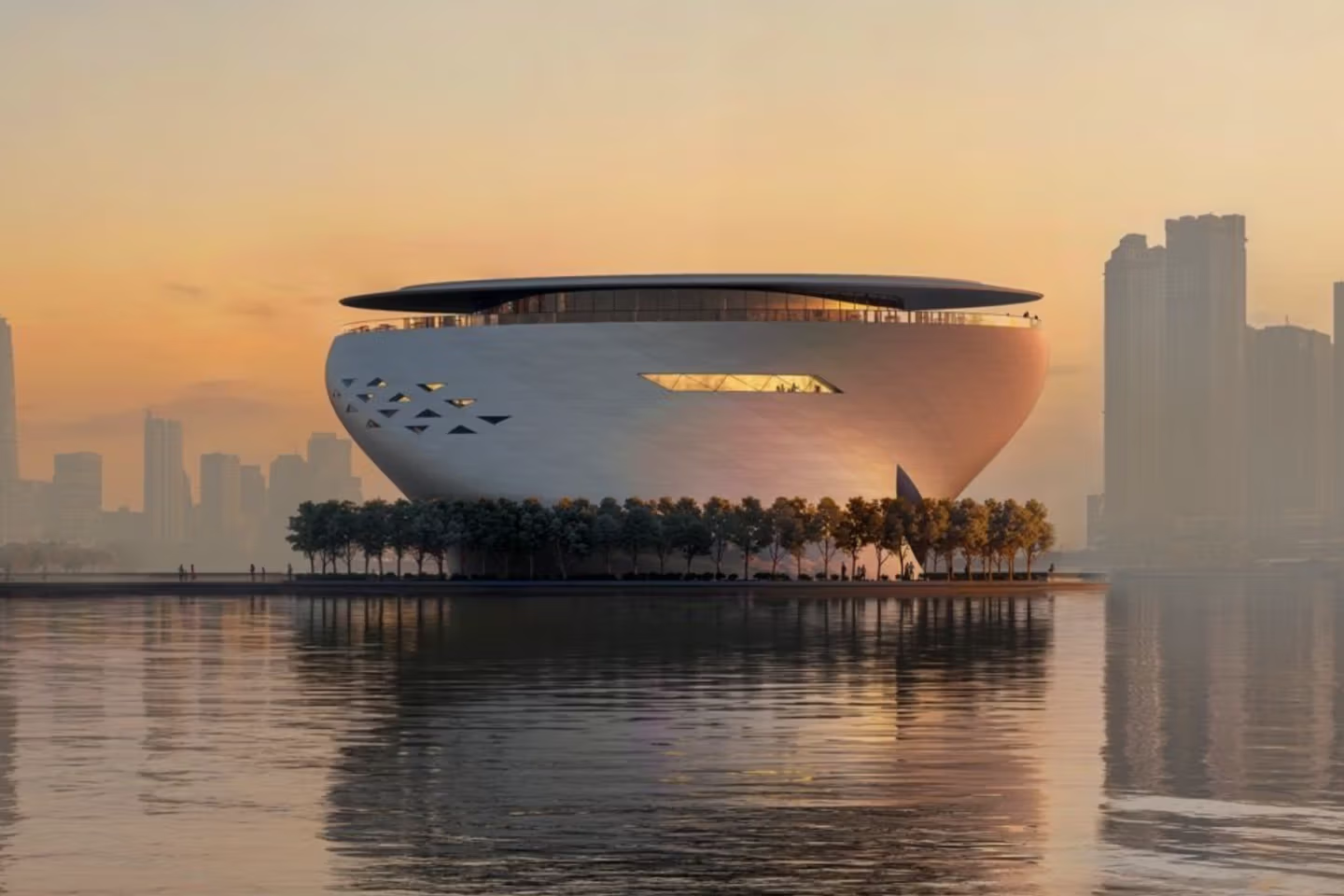
The Tadao Ando Floating Art Museum Dubai is not just a building — it’s a revolution in design and sustainability. Rising from the Persian Gulf like a mirage, this architectural wonder captures Dubai’s ambition and Tadao Ando’s minimalist genius. The museum is set to redefine how we experience art, nature, and light — all floating together in perfect harmony.
Designed by Tadao Ando, the Japanese Pritzker Prize-winning architect, the museum’s circular form symbolizes infinity and balance, making it one of Dubai’s most anticipated cultural landmarks
The Vision Behind Tadao Ando’s Floating Art Museum
Ando’s architectural philosophy is built on the spiritual use of concrete, geometry, and natural elements. In the Floating Art Museum, he fuses Japanese simplicity with Dubai’s futuristic energy.
According to ArchDaily, Ando believes that “water is architecture’s mirror.” His Dubai museum exemplifies this: every curve, wall, and reflection tells a story of tranquility meeting innovation. The structure floats effortlessly, reflecting both the sea and the skyline — an ever-changing canvas of light and shadow.
Architectural Concept: Floating Minimalism
The museum’s structure is an engineering marvel. Resting on a hydrodynamic platform, it maintains stability against tides and waves. The circular plan references infinity — a recurring Ando motif seen in projects like the Church of the Light.
Inside, diffused natural light filters through skylights and curved corridors, creating an ethereal glow that evolves throughout the day. Each gallery opens toward the horizon, allowing the sea itself to participate in the exhibition narrative.
Art Meets Water
Unlike conventional museums, the Floating Art Museum Dubai transforms art-viewing into a multisensory journey. Visitors approach via a glass underwater tunnel, emerging into an open atrium surrounded by panoramic ocean views. Installations from international and Middle Eastern artists explore the relationship between human creativity and nature’s fluidity.
Special exhibitions are expected to feature collaborations with institutions like the Louvre Abu Dhabi and Dubai Culture, fostering cultural dialogue across continents.
Sustainability & Innovation
Sustainability is central to Ando’s design philosophy. The museum integrates solar energy systems, rainwater collection, and marine-friendly materials to minimize ecological impact. Its cooling design harnesses natural sea breezes, reducing dependence on artificial air conditioning — a significant achievement in Dubai’s desert climate.
The structure also functions as a marine observatory, monitoring coral health and local biodiversity, bridging art and environmental science.
Location and Visitor Experience
Anchored near Dubai’s coastline — rumored to be close to The Palm Jumeirah — the museum is accessible via electric water taxis and eco-friendly yachts. Upon arrival, visitors are greeted by a serene courtyard featuring a shallow reflecting pool that mirrors the skyline.
Inside, curved concrete walls lead to galleries, a floating café, and a sky terrace with 360° views of the sea and city. Interactive digital installations and guided tours make the experience both educational and deeply meditative.
Symbolism and Cultural Impact
Dubai’s architectural landscape is often associated with spectacle, but Tadao Ando brings spiritual quietude. His floating museum invites reflection — on time, art, and the balance between progress and preservation.
This project reinforces Dubai’s global position as a cultural destination, complementing landmarks like the Museum of the Future and the Louvre Abu Dhabi. It stands as a symbol of unity between East and West, tradition and modernity.
Conclusion
The Tadao Ando Floating Art Museum in Dubai redefines what an art space can be — not confined by land, but expanded by imagination. Through his mastery of concrete, geometry, and water, Ando gifts the world a tranquil masterpiece that reflects both nature’s fragility and human creativity’s boundless strength.
As visitors stand between sky and sea, surrounded by art that moves with the tide, they’ll witness Dubai’s evolution — not just as a city of innovation, but as a sanctuary of reflection.